AQUIFER · S021 South America · beneath four countries
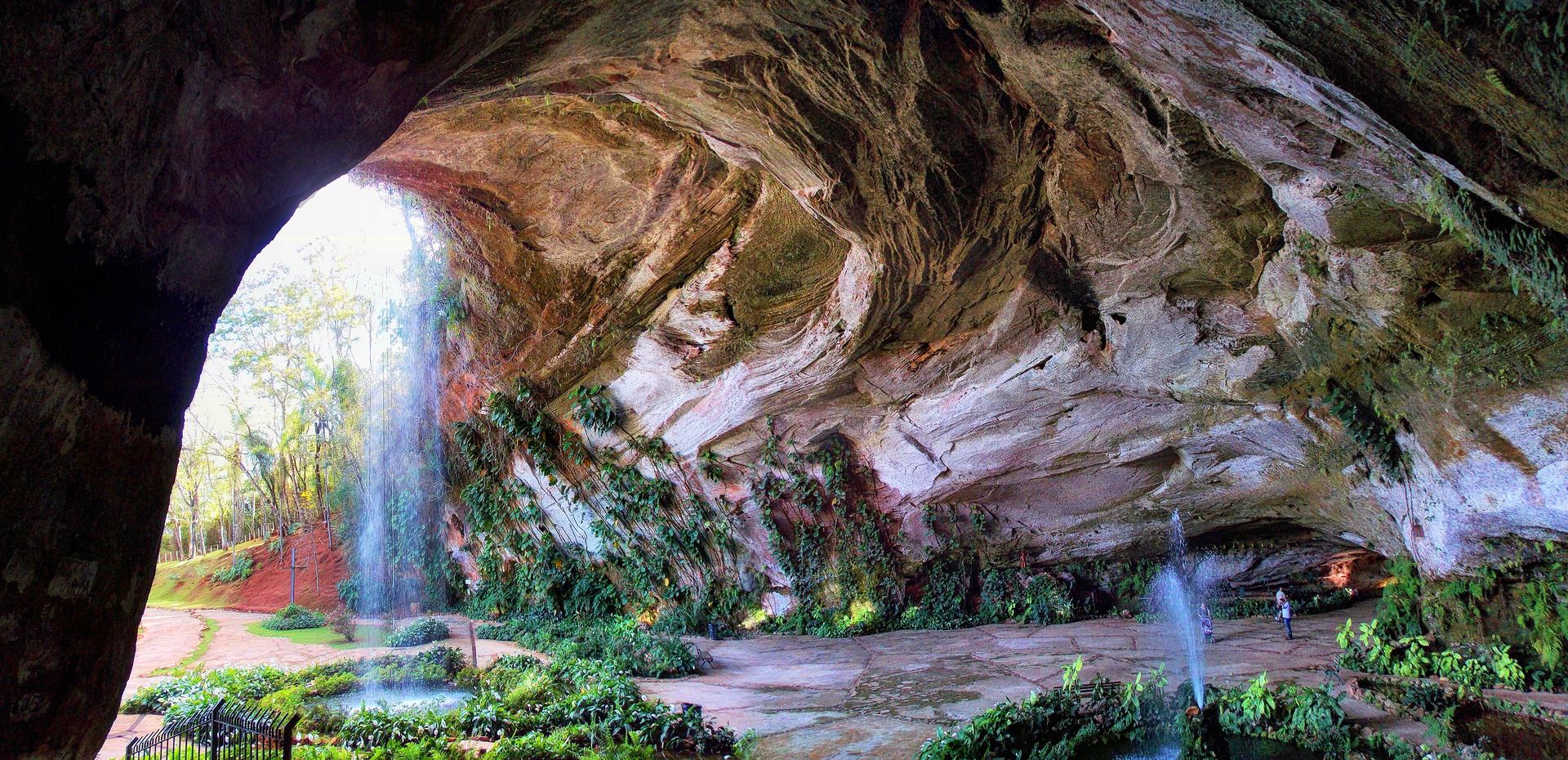
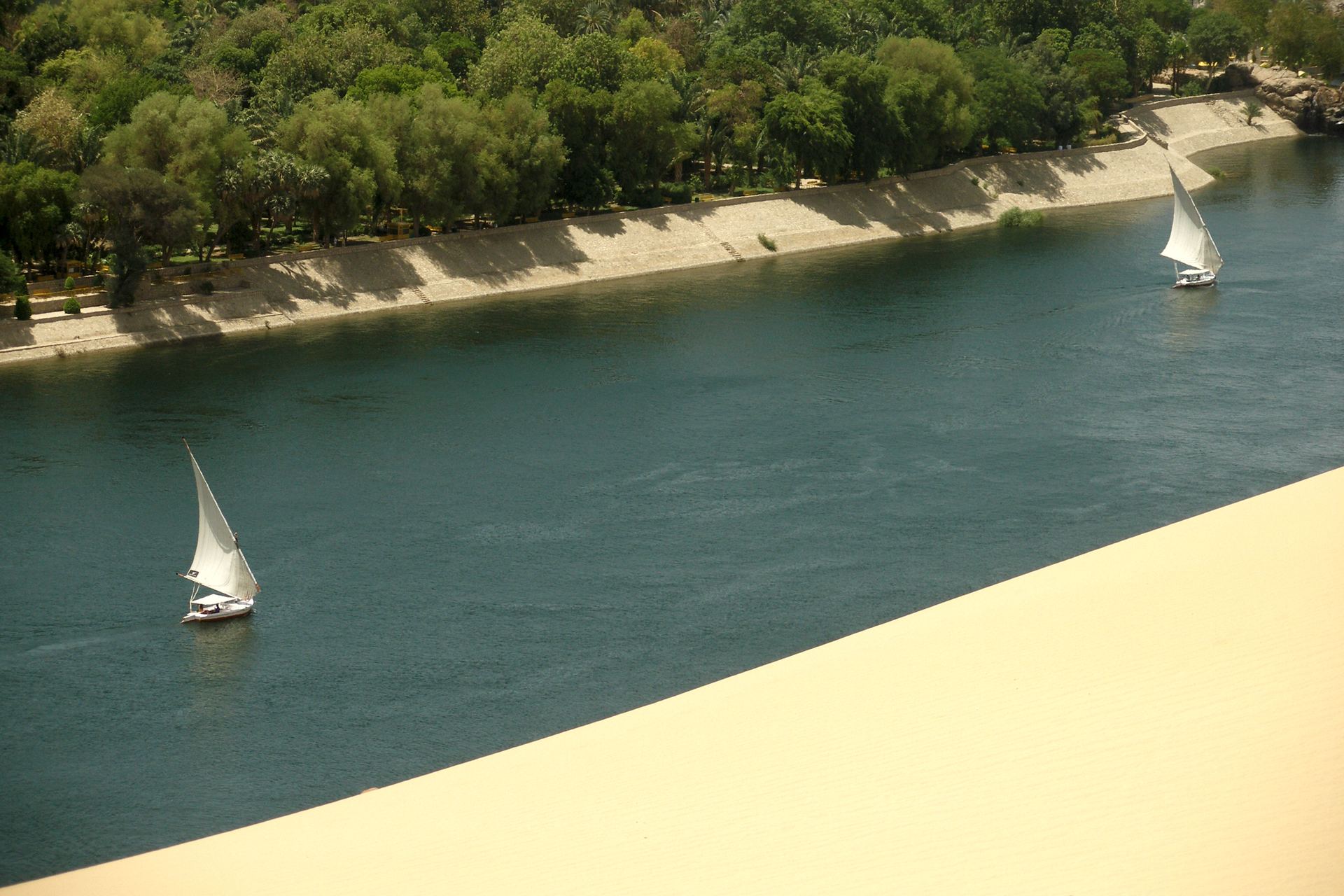
You are looking at the only part of this story you can see: water falling over the rock that holds a hidden sea. Everything else happens in darkness, up to 1,800 metres down.
The invisible sea
There is a sea under South America. It has no shore and no horizon; no one has ever seen it, and no one ever will. It fills the pores of a sandstone laid down when dinosaurs walked a desert the size of a continent — and today it holds roughly enough fresh water to supply the entire world for decades. Above it live ninety million people in four countries, most of whom have never heard its name.
The Guaraní Aquifer System stretches under some 1.1 million square kilometres of Brazil, Argentina, Paraguay and Uruguay — an area larger than France and Spain combined. Cities drink it. Farms pump it. In Uruguay and Argentina, resorts pipe up its warmth as thermal baths. It crosses three international borders without a single visible sign that it exists.
Rivers announce themselves; aquifers keep their secrets. Sharing water you can see is hard. Sharing water no one can see is a different problem entirely.
Legends & names
Until 1996 the water had no single name — each country named the sandstone it sat in, as if four rooms refused to admit they shared a house. The Uruguayan geologist Danilo Antón proposed naming the whole system for the Guaraní people, whose lands span all four countries and in whose language y — a single letter — means water. The name was an argument: one people, one aquifer, one responsibility.
The aquifer
Sources: GRACE / GRACE-FO gravimetry & published La Plata studies (storage); WRI Aqueduct (stress); FAO AQUASTAT (dependency). Real aquifer & country geometry (IGRAC 2025 · Natural Earth); figures curated from published data.
Cooperation & conflict
For most of history, the answer was: you don't. Groundwater was pumped by whoever drilled first and asked no questions. Of the 882 international water treaties signed since 1820, only a few dozen substantively address groundwater at all. The Guaraní's story is the great exception — a treaty negotiated not after a crisis, but before one.
Danilo Antón proposes "Guaraní Aquifer System" for the sandstone waters of all four countries — the first act of shared ownership is an act of naming.
The GEF/World Bank Guaraní Aquifer System Project: a joint scientific campaign in which the four states drill, measure and model the aquifer as a single body — building the trust the treaty would need.
Signed at San Juan, Argentina: one of the first treaties on Earth dedicated to a specific transboundary aquifer. Each state is sovereign over its territory — and each accepts the duty not to cause the others significant harm.
Concordia (Argentina) and Salto (Uruguay), facing each other across the Uruguay River, agree to manage their shared thermal groundwater together — treaty principles at the scale of two towns.
A decade after signature, the fourth ratification arrives and the agreement becomes binding law — the slow tempo of groundwater, mirrored in its diplomacy.
The cooperation indicator
Quiet — and cooperative
The record is thin, as it is for almost all aquifers: no water wars, no sanctions — joint science and negotiation dominate what record exists.
TFDD events: none — the events database covers rivers, not aquifers. Absence of a record is not absence of stakes.
Rare — a dedicated treaty
Two agreements in the record — but one is a dedicated aquifer treaty, which fewer than a handful of the world's 426 shared aquifers possess. The promised joint commission, however, is still not operational.
Dedicated treaties: 2
Reported, not yet running
All four countries report the Guaraní under SDG 6.5.2, and IGRAC rates its boundary data "Good" — but an operational arrangement in daily practice is still being built.
SDG 6.5.2: weighted 55.4% — and all 4 states reported, itself unusual for an aquifer
Low — outside coverage
Not part of the cooperation score. The Water, Peace & Security partnership forecasts near-term conflict risk from climate, hydrological and socio-economic signals — a forward-looking companion to the historical record below.
Water, Peace & Security forecast → · a forecast, not scored here
The 2010 Guaraní Aquifer Agreement promised a joint commission (Article 15) to coordinate the aquifer’s management. Fifteen years on, it has never convened — the institution exists on paper only.
Pacific Institute typology — trigger: a dispute over water that sparks violence · weapon: water or water systems used as a means of attack · casualty: water systems damaged in fighting.
Water-conflict events recorded across the Guaraní's four countries (Pacific Institute) — national and local incidents. The aquifer itself has never been the object of violence — a quiet the treaty aims to keep.
A four-out-of-five for an aquifer is extraordinary — most of the world's 426 shared aquifers would score a grey "no assessment possible." The honest caveat runs the other way here: the treaty exists, but its joint commission does not yet meet. Paper cooperation is real cooperation only when someone convenes the meeting. How this indicator is built →
The paper aquifer
Signed by Argentina, Brazil, Paraguay and Uruguay at San Juan. Sovereignty over each territory, a duty to avoid significant harm to the neighbours, information exchange, and a commission to come. In force since 2020.
Across the Uruguay River, an Argentine municipality and a Uruguayan intendencia agree to jointly steward the thermal waters both economies depend on — the aquifer treaty's principles, applied at the scale of two towns.
Article 15 of the agreement promises a joint commission to coordinate the aquifer's management. Fifteen years after signature, it has yet to convene — the Guaraní's next chapter is an empty chair.
For comparison: the Danube has 62 agreements. Underground, two is world-leading. SOURCE: TFDD INTERNATIONAL FRESHWATER TREATIES DATABASE
What the research says
Why should one agreement over one aquifer matter to the other 425? The legal scholarship offers an answer — and a caution:
The Guaraní Agreement's significance lies less in what it enforces than in what it demonstrates: that four states can write binding international law for a resource none of them can see, and can do so before a crisis forces them to. Signed in 2010, it was the first treaty for a specific transboundary aquifer concluded after the UN International Law Commission's Draft Articles on the Law of Transboundary Aquifers.
The caution is in the years that followed. Ratification was slow, and the institutional machinery the agreement sketched has been slower still — which is why the legal literature has moved from describing the Guaraní as a beacon to treating it as an open question. A treaty proves that agreement is possible; it does not, on its own, prove that governance follows.
Francesco Sindico Professor of International Environmental Law, University of Strathclyde Summarised from: Sindico, F. (2011) “The Guarani Aquifer System and the International Law of Transboundary Aquifers”, International Community Law Review 13(3): 255–272; and Sindico, Hirata & Manganelli (2018), Journal of Hydrology: Regional Studies · read the original →
Our summary of published work — not a quotationThe view from above
In Concordia and Salto, the aquifer is not an abstraction — it is hot water, tourism, and a payroll:

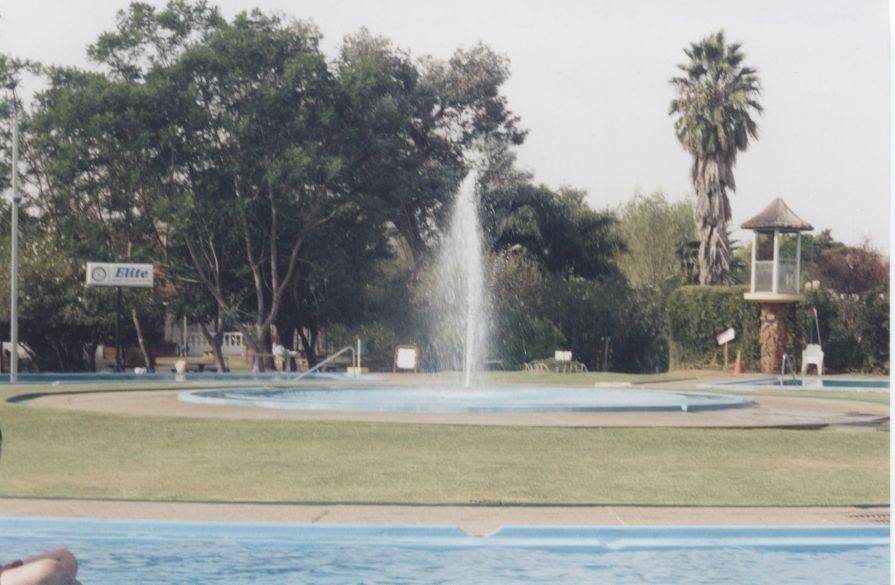
The thermal water comes up at forty degrees, and the tourists come with it. People here understood before the diplomats did: if Salto pumps too hard, our wells feel it — and theirs feel ours. The border is on the map, not in the rock.
A thermal-well operator's accountComposite voice — drawn from published reporting on the Concordia–Salto thermal corridor and GEF project consultations · Illustrative photo: Termas de Daymán, Góngora, CC BY 2.5
Composite, clearly marked — not a named individual
Prospects
Water in the Guaraní moves metres per year. Rain that soaks into the recharge zones today may not reach a deep well for centuries — which means every mistake is inherited by people not yet born. The pressures are already visible at the surface: expanding irrigation and cities drawing down local water tables, and agrochemicals seeping into the thin, sandy recharge zones that are the aquifer's only lungs.
The treaty exists; the science is good; the commission is missing. The Guaraní's question for the century is whether institutions can learn to move as slowly and as surely as the water they govern — to act on problems whose symptoms will not appear for generations.
Above ground, water diplomacy answers crises. Underground, it has to answer the future.
Next story · River basin
Eleven countries, five thousand years of recorded history, and a dam that redrew the politics of a continent. Back to the surface — where the water, and the tension, are visible.
Read the story →