MixedCooperation status · 3 of 5

RIVER BASIN · MEKO Asia · Tibetan Plateau → South China Sea

The Mekong

Once a year, this river beats like a heart — the flood pulse that feeds sixty million people. Upstream, a staircase of dams is learning to hold the heartbeat back.

▾ begin

The river that breathes

Every June, something happens on the Mekong that happens on no other great river: a tributary reverses. Swollen by the monsoon, the mainstream pushes so hard that the Tonlé Sap river turns and flows backwards, inflating Cambodia's great lake to five times its dry-season size. Fish surge into the drowned forests to spawn; a fifth of a nation's protein follows. The Mekong does not simply flow — it breathes.

Six countries share the breath: China, where the river falls off the Tibetan Plateau as the Lancang; Myanmar, Laos, Thailand and Cambodia along its middle reaches; and Vietnam, where it fans into the "nine dragons" of the delta. Around sixty million people in the lower basin live directly from its water, its silt and its fish — the largest inland fishery on Earth.

Dams do not steal the Mekong's water so much as its rhythm — and on this river, the rhythm is the wealth.
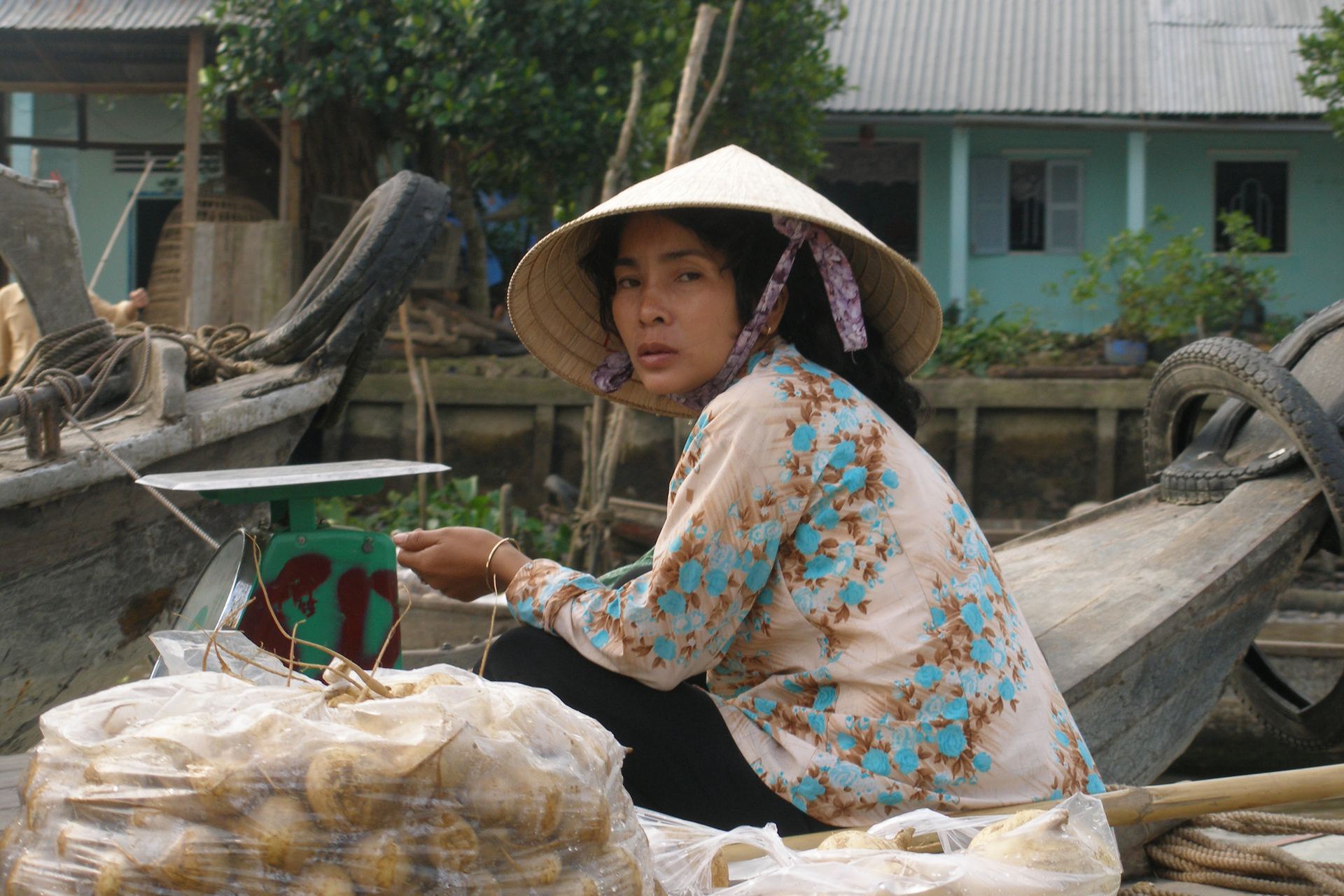
A vendor at a floating market in the Mekong Delta, Vietnam
Phong Điền floating market, Mekong Delta. The delta feeds Vietnam and much of the world's rice trade — on silt the river carries from five countries upstream. Photo: Vyacheslav Argenberg · CC BY 4.0 · Wikimedia Commons

Legends & names

Six countries, six rivers, one water.

澜沧江Lancang · Chinese · "turbulent river"
แม่น้ำโขงMae Nam Khong · Thai
ແມ່ນ້ຳຂອງMae Nam Khong · Lao · "mother of waters"
ទន្លេមេគង្គTonlé Mékông · Khmer
Cửu LongVietnamese · "nine dragons"

In Lao and Thai the river is a mother; in Vietnam it arrives as nine dragons fanning to the sea; in Khmer legend the naga serpents dug its channels. China's name — the turbulent Lancang — describes a different river entirely: a gorge-bound torrent that produces power rather than fish. The names diverge exactly where the interests do.

The basin

From Tibetan ice to the nine-dragon delta.

Sources: FAO AQUASTAT (external-water dependency); WRI Aqueduct (baseline water stress); GOODD / public records (dams). Real basin & country geometry (TFDD · Natural Earth); figures curated from published data.

0riparian countriesChina, Myanmar, Laos, Thailand, Cambodia, Vietnam
0km² of basinfrom Tibetan glaciers to the South China Sea
0million people in the lower basinliving directly from the river's water, silt and fish
0million tonnes of fish a yearthe largest inland fishery on Earth

Cooperation & conflict

The commission that covers two thirds of a river.

The Mekong owns one of the oldest river institutions outside Europe — and one of the most incomplete. Its commission was born in the Cold War, survived the Vietnam War and the Khmer Rouge, and re-founded itself in 1995. But its membership stops at the Chinese border: the country that controls the headwaters, and Myanmar, sit outside as "dialogue partners." The basin's central fact is that its rule-book and its water do not fully overlap.

1957

The Mekong Committee

Under UN auspices, Cambodia, Laos, Thailand and South Vietnam create a joint committee to survey the lower basin — river cooperation that would outlast three wars.

1975

Joint Declaration of Principles

The four lower states adopt principles for using the lower basin's waters — signed months before the region's political map is redrawn around them.

1995

The Mekong Agreement

Cambodia, Laos, Thailand and Vietnam found the Mekong River Commission: sustainable development, prior consultation on mainstream dams, and a permanent secretariat. China and Myanmar decline to join.

2002

Data crosses the border

China agrees to share flood-season hydrological data from the Lancang with the MRC — narrow in scope, but the first standing information bridge between the upper and lower basin.

2010 →

The dam era tests the rules

Laos notifies the Xayaburi dam — the first mainstream dam below China — triggering the MRC's prior-consultation process. The process runs; the dam is built anyway. More follow.

2016

Lancang–Mekong Cooperation

China launches its own six-country framework, the LMC — all the riparians at one table at last, but under Beijing's chairmanship and outside the MRC's rules. The basin now has two overlapping diplomacies.

2019–2020

Drought, and a reckoning over data

Record drought empties the river while satellite studies show reservoirs holding water upstream. Under pressure, China agrees to share year-round Lancang data — transparency, imposed by orbit.

The cooperation indicator

How is the sharing going?

High tensionTensionMixedCooperativeStrong cooperation

01 · Event history

Cooperation with friction

Decades of joint studies and data exchange, punctuated by drought-year accusations and unilateral dam decisions — a record that cuts both ways.

TFDD events 1948–2008: 790 · mean +1.67 · 84% cooperative

02 · Institutional depth

Strong — but partial

21 agreements and a standing commission with real technical capacity. The caveat is structural: the MRC binds only 4 of 6 riparians, and its consultation rules cannot stop a dam.

TFDD treaties: 21 · browse them →

03 · Operational arrangements

Substantial in the lower basin

Under SDG 6.5.2, the four MRC states report high operational coverage of the basin area — the gap is the upper basin, outside any binding arrangement.

SDG 6.5.2: weighted 62.3% — but only 1 of 6 riparians reported; China and Myanmar sit outside the MRC

△ · Conflict-risk forecast

Moderate — livelihood stress

Not part of the cooperation score. The Water, Peace & Security partnership forecasts near-term conflict risk from climate, hydrological and socio-economic signals — a forward-looking companion to the historical record below.

Water, Peace & Security forecast → · a forecast, not scored here

MRC

The institution

Mekong River Commission

Founded 1995 · 4 members (Cambodia, Laos, Thailand, Vietnam) · real technical capacity and a prior-consultation process — but China and Myanmar, who control the headwaters, remain dialogue partners outside it.

www.mrcmekong.org ↗

More: all 117 river basin organizations →

The shadow record · water conflict

84events, 1900–2025
46 casualties23 weapons25 triggers49 since 2000

Pacific Institute typology — trigger: a dispute over water that sparks violence · weapon: water or water systems used as a means of attack · casualty: water systems damaged in fighting.

Water-conflict events recorded across the Mekong's countries (Pacific Institute) — national and local incidents, not only transboundary disputes.

"Mixed" is the honest word: the Mekong has more working cooperation than the Nile and less binding law than the Danube. Its defining nuance is membership — a commission that works, covering a river it only partly contains. Flattening that into one badge would hide exactly what matters. How this indicator is built →

The paper river

Three texts that shaped the basin.

1957

Statute of the Mekong Committee

Four lower-basin states, under UN auspices, agree to investigate and develop the river together — the founding act of six decades of institutionalized cooperation.

UN framework · investigation & development · 4 parties
1995

Mekong Agreement

The basin's constitution: sustainable development of the lower basin, procedures for notification and prior consultation, and the Mekong River Commission to run them. China and Myanmar remain outside.

Signed Chiang Rai · environment, navigation, flood management · 4 parties
2018

Lancang–Mekong Cooperation Plan of Action

The five-year programme of China's rival framework — all six riparians cooperating on water resources, but by political declaration rather than binding treaty law.

LMC framework · socioeconomic development · 6 parties

…and 18 more agreements in the record, from border demarcations to flood-season data. SOURCE: TFDD INTERNATIONAL FRESHWATER TREATIES DATABASE

The expert's view

Has the region's main river body actually grappled with its dams? A leading scholar of river-basin organizations:

There is probably no basin organisation that has conducted as much work on dams as the MRC.

Susanne SchmeierProfessor of Water Law and Diplomacy, IHE Delft · quoted in Water Power Magazine, "Preventing conflicts over transboundary dams"

The view from the water

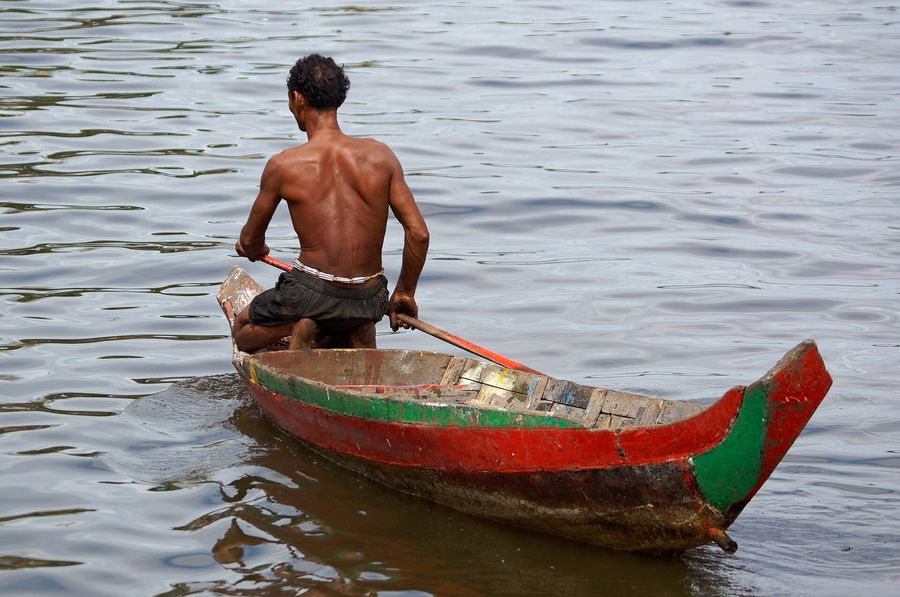
On the Tonlé Sap, the great lake that beats with the river, the changed rhythm is not a dataset — it is dinner:

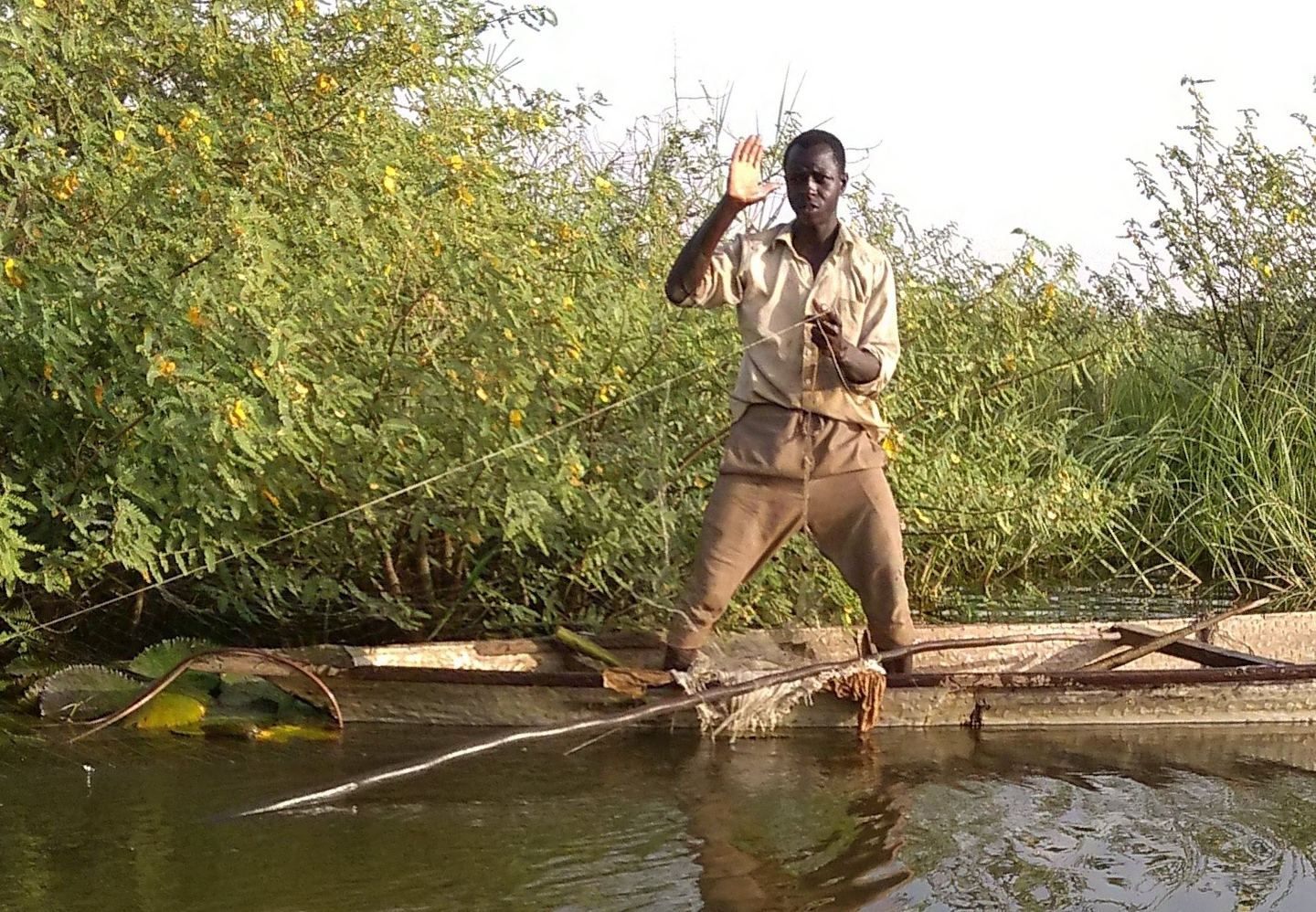
A fisherman standing in his boat on the Tonlé Sap
My grandfather could read the flood like a calendar — when it came, how high, how long. Now the river rises when no rain has fallen and falls in the middle of the season. The fish are as confused as we are.

A Tonlé Sap fisher's accountComposite voice — drawn from published interviews in Tonlé Sap fishery reporting (MRC consultations, journalistic and NGO case studies) · Illustrative photo: Jakub Hałun, CC BY-SA 4.0

Composite, clearly marked — not a named individual
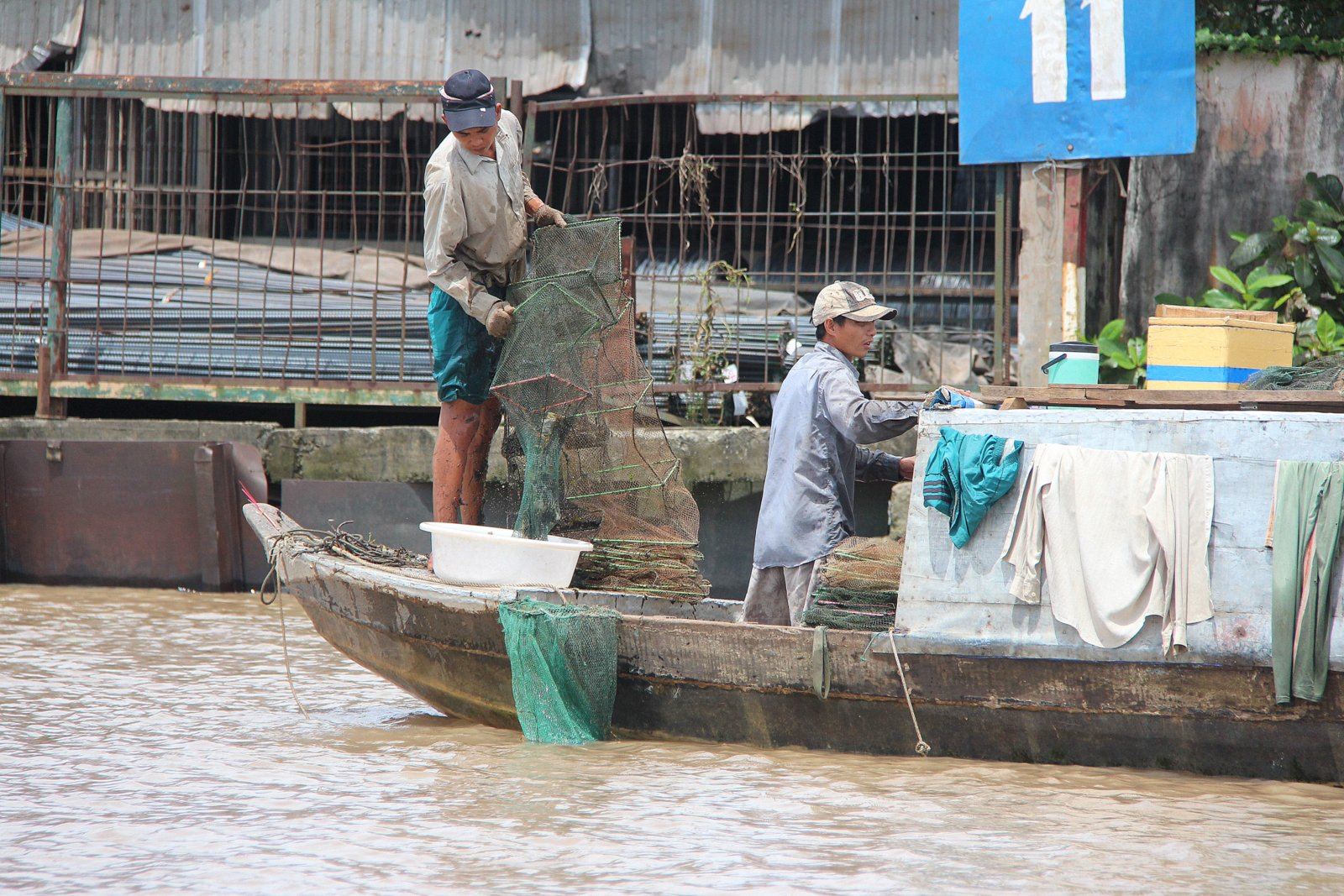
A fisherman emptying his net on the Mekong in Vietnam
Emptying the net on the Mekong. The basin's fishery feeds tens of millions — and depends on a flood pulse no single country controls. Photo: Peter van der Sluijs · CC BY-SA 3.0 · Wikimedia Commons

Prospects

Engineering a heartbeat.

The dams are not going away — hydropower is the lower basin's export earner and China's cascade is built. The question that will decide the Mekong's next half-century is narrower and stranger: can a staircase of reservoirs be operated to imitate a monsoon? Coordinated releases could preserve some of the flood pulse the fishery needs; uncoordinated ones will flatten it into a canal.

Meanwhile the delta — home to twenty million people and much of the world's traded rice — is sinking as the silt that built it is trapped behind walls upstream, and the sea pushes salt further inland each dry season. The Mekong's two diplomacies, MRC and LMC, now face a test neither was designed for: not dividing water, but choreographing it.

The Mekong was never about who gets the water. It is about who keeps the rhythm.

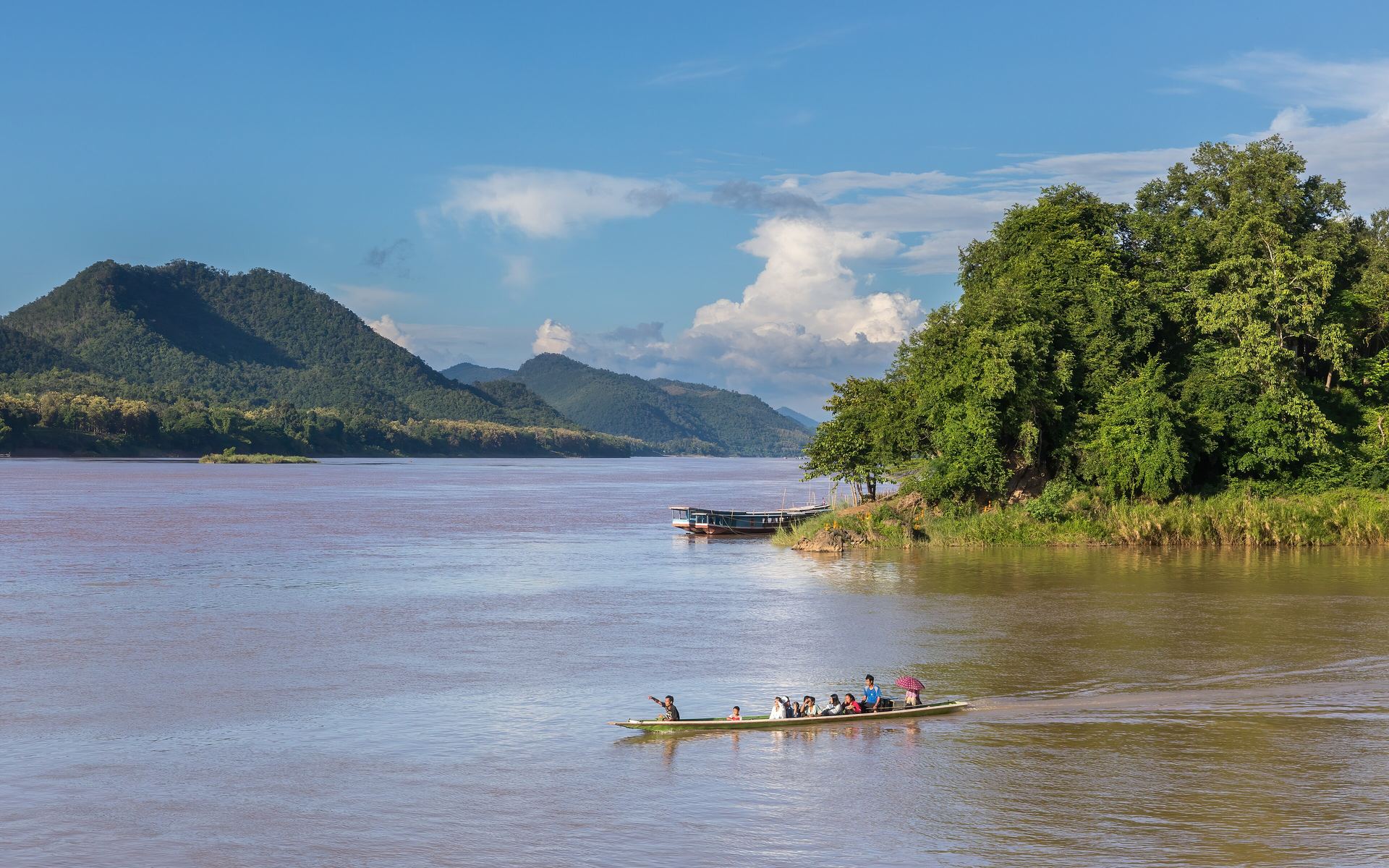
A pirogue crossing the Mekong at Luang Prabang, Laos
The Mekong at Luang Prabang, Laos — between the dams above and the delta below, the river still carries its old life. Photo: Basile Morin · CC BY-SA 4.0 · Wikimedia Commons

Next story · River basin

Lake Chad

A lake that shrank by nine tenths, eight countries in its basin, and only four treaties between them — where water stress and human security collide.

Read the story →